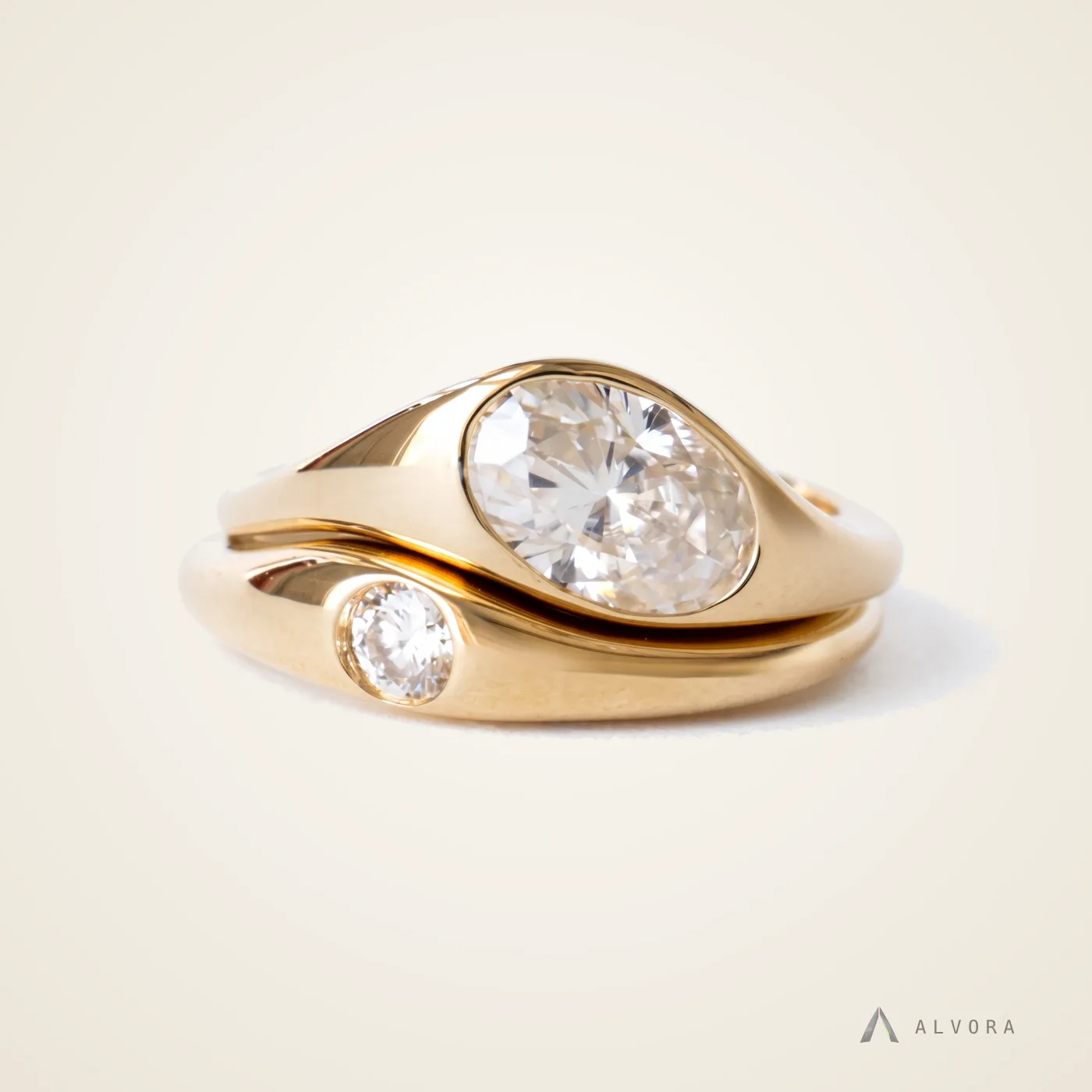
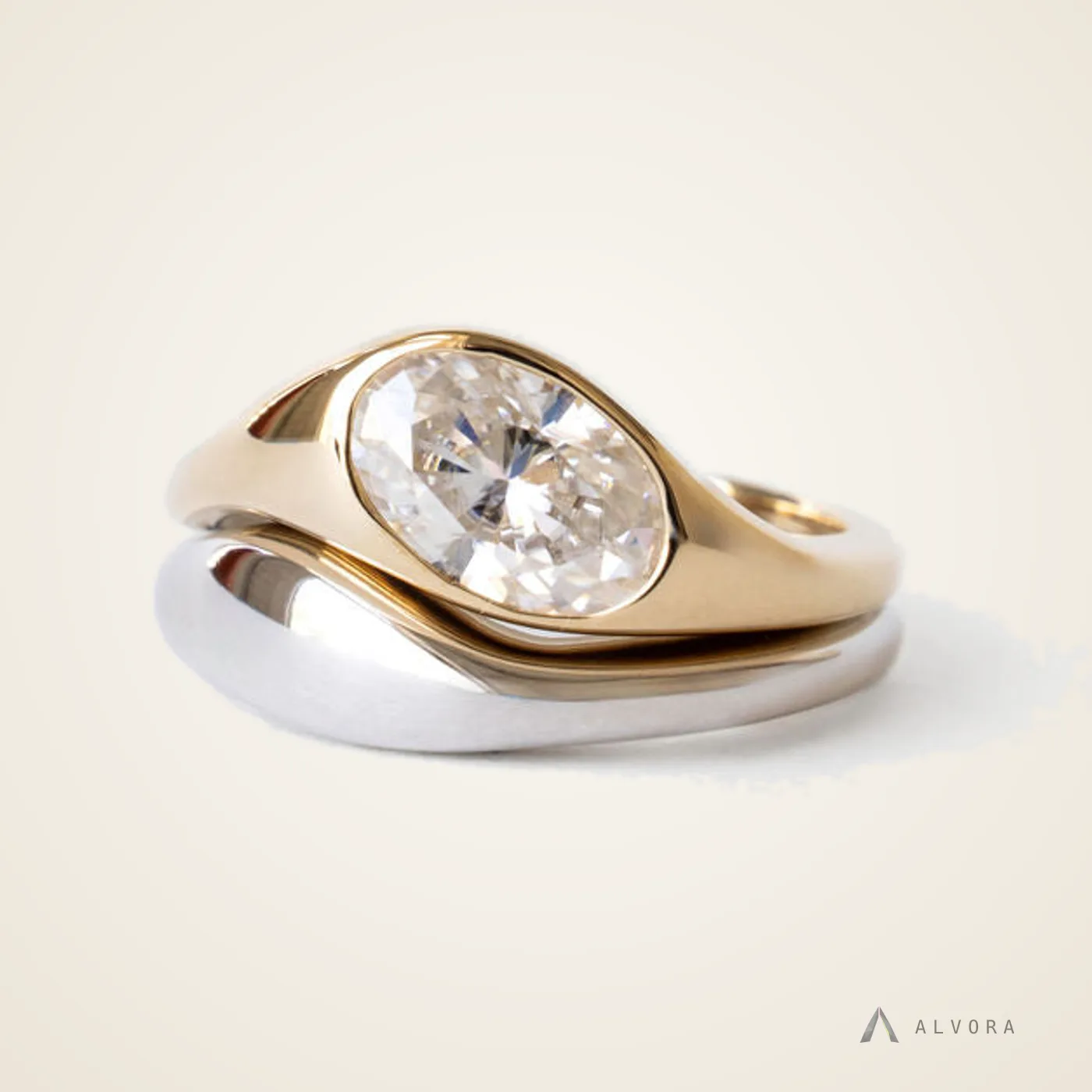
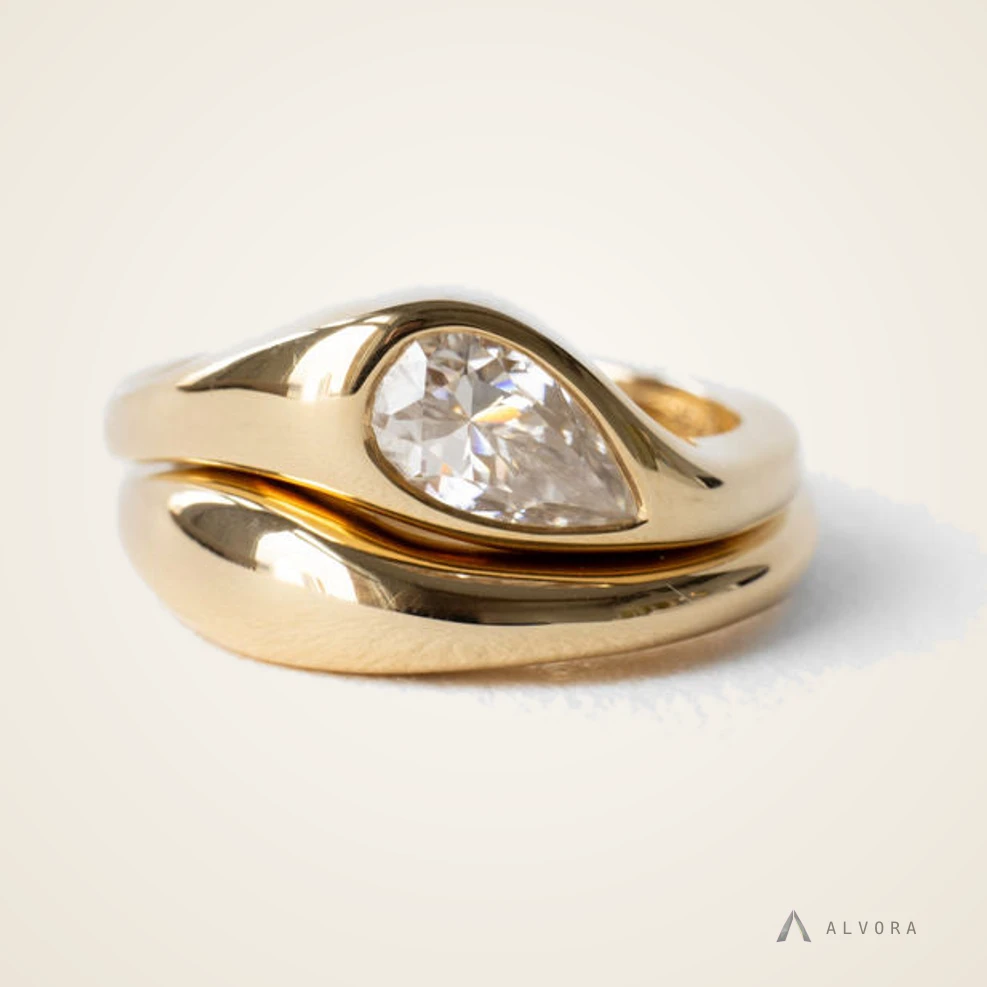
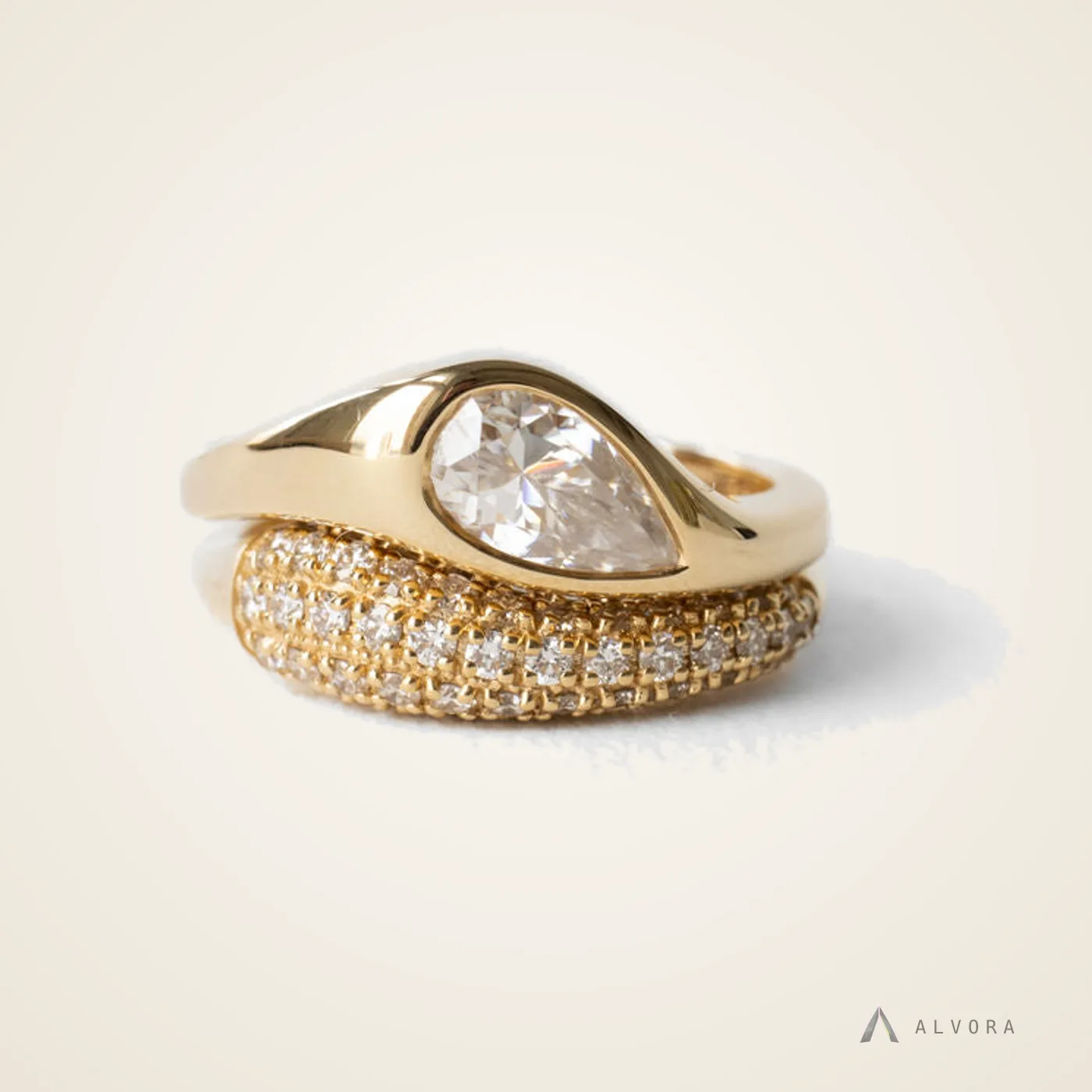
What is an east-west setting?
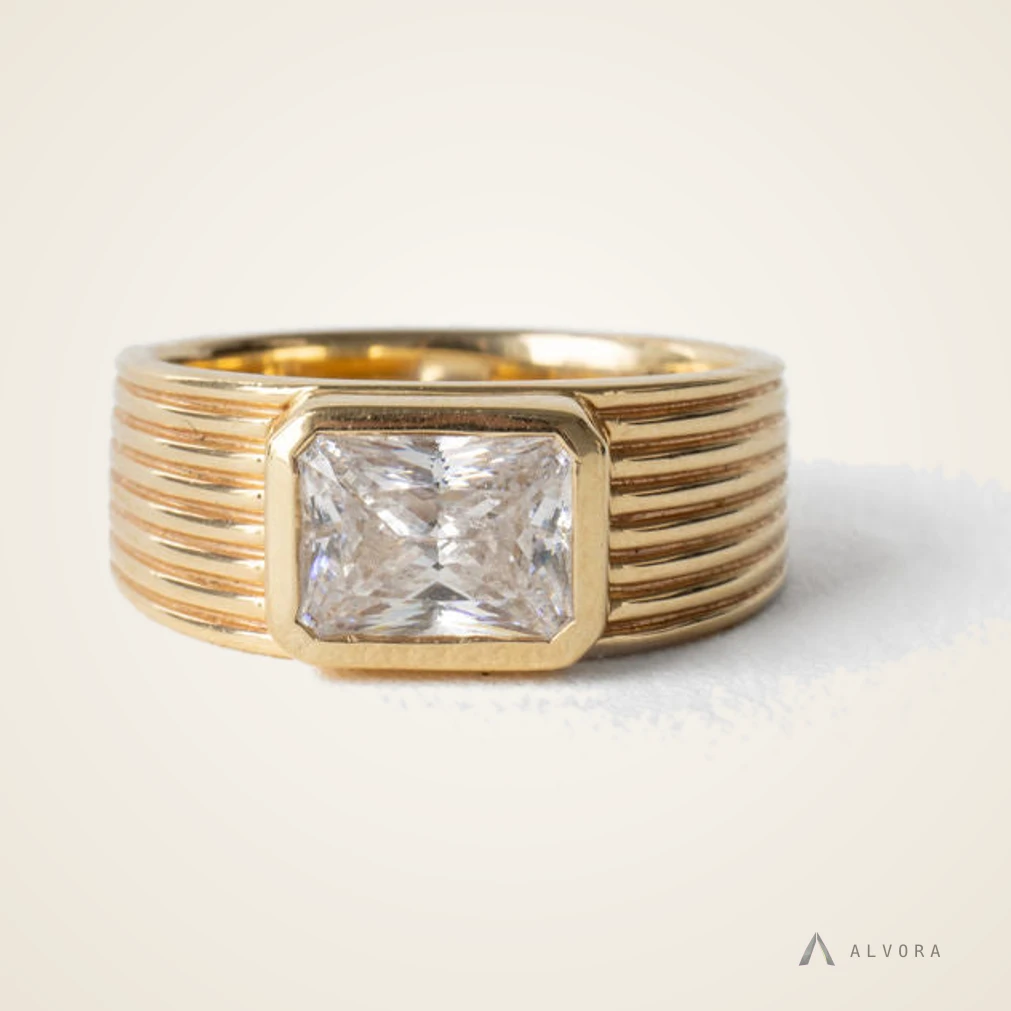
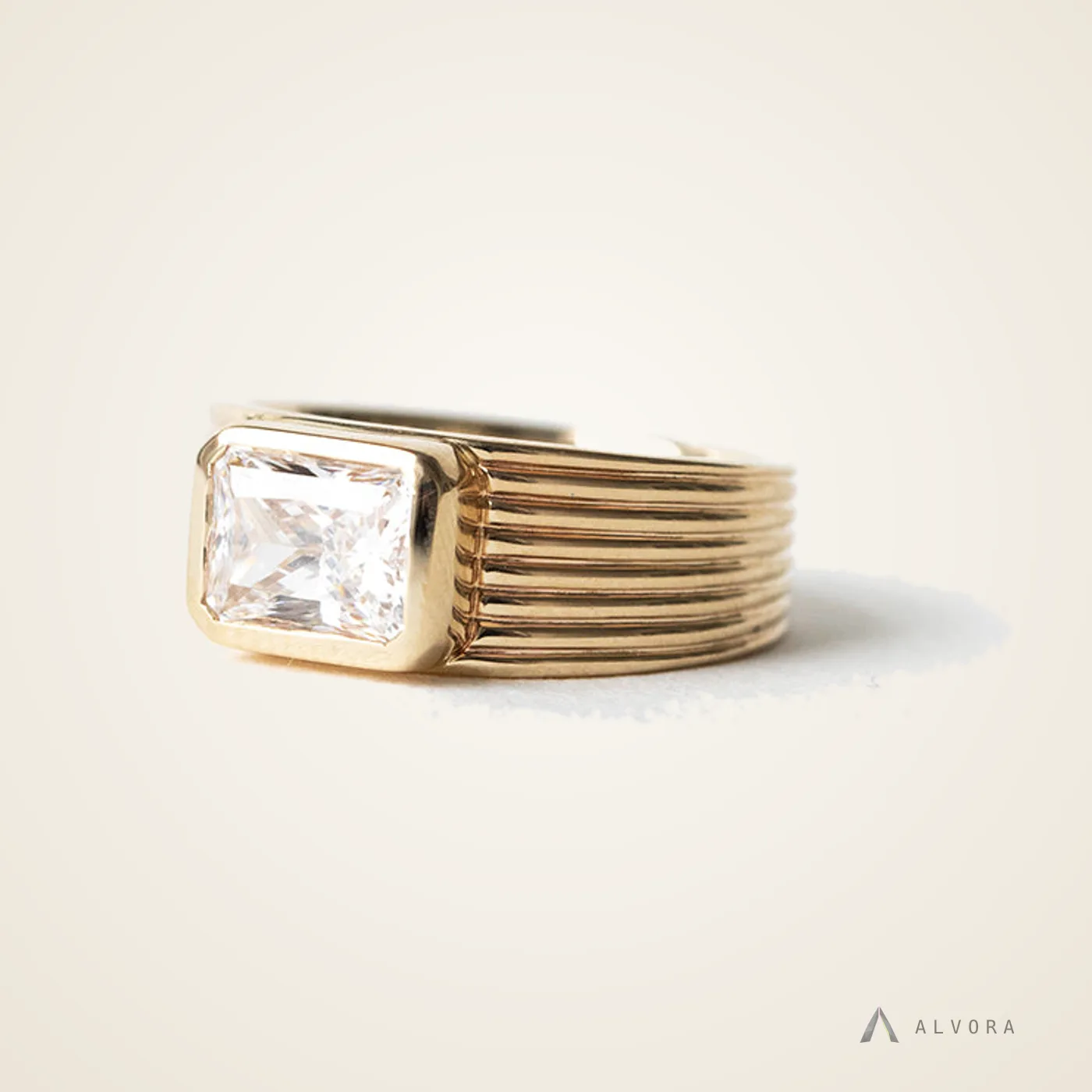
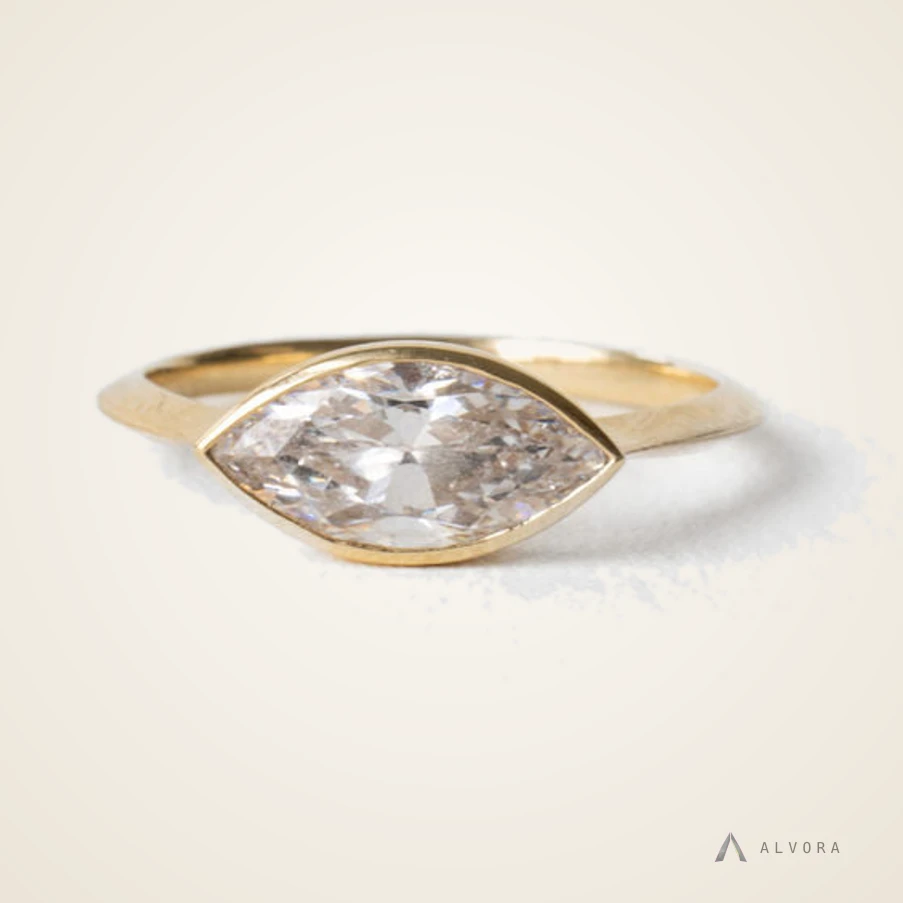
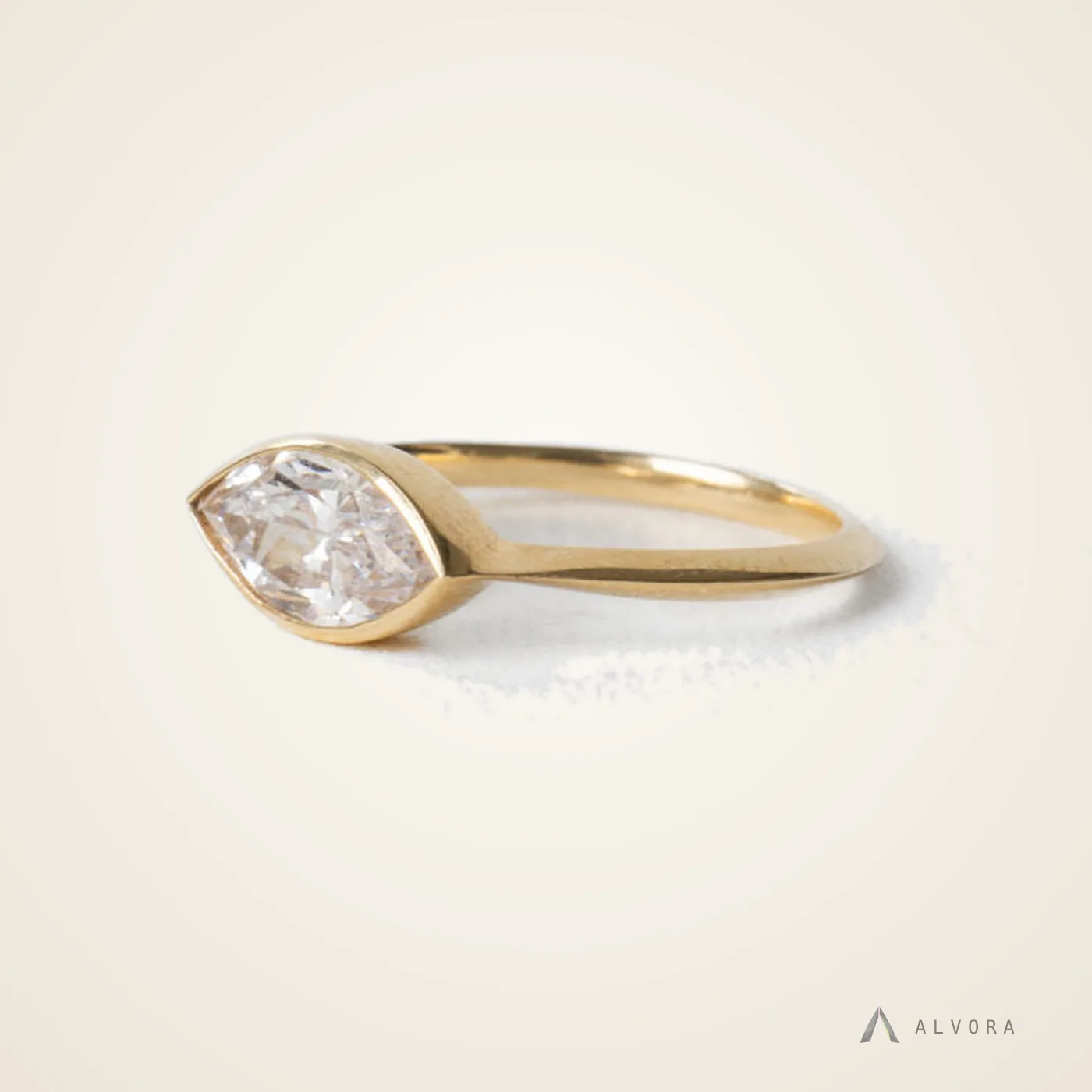
An east-west setting holds an elongated diamond horizontally across the finger instead of pointing along it. Ovals, marquises, emerald cuts, pears and radiants all suit it; the sideways orientation gives a modern look and makes the stone read wider on the hand.
Browse east-west ringsWhich shapes work east-west?
Any elongated shape: oval, marquise, emerald, pear, radiant and elongated cushion. The longer the stone relative to its width, the stronger the effect.
Round and square stones look the same in either orientation, so the style only makes sense for elongated shapes.
How does it change the look?
The stone covers more of the finger's width, so the ring reads bolder and more modern from above. It is a simple way to make a classic solitaire feel designed rather than traditional.
On shorter fingers the sideways line can balance proportions better than a long stone pointing toward the knuckle.
Does it wear differently?
The stone's long edges now sit toward the neighbouring fingers, so a comfortable gallery height matters. A well-made east-west setting keeps the stone low enough not to catch.
Pointed ends on marquises and pears still need protective prongs, exactly as in a north-south setting.
Is it a passing trend?
The orientation dates back to vintage bar rings and Art Deco design; its current popularity is a revival rather than an invention. In a plain solitaire form it ages like any classic.
If you want the option of both looks, a north-south setting is the safer default; east-west is the deliberate choice.
Browse east-west rings